
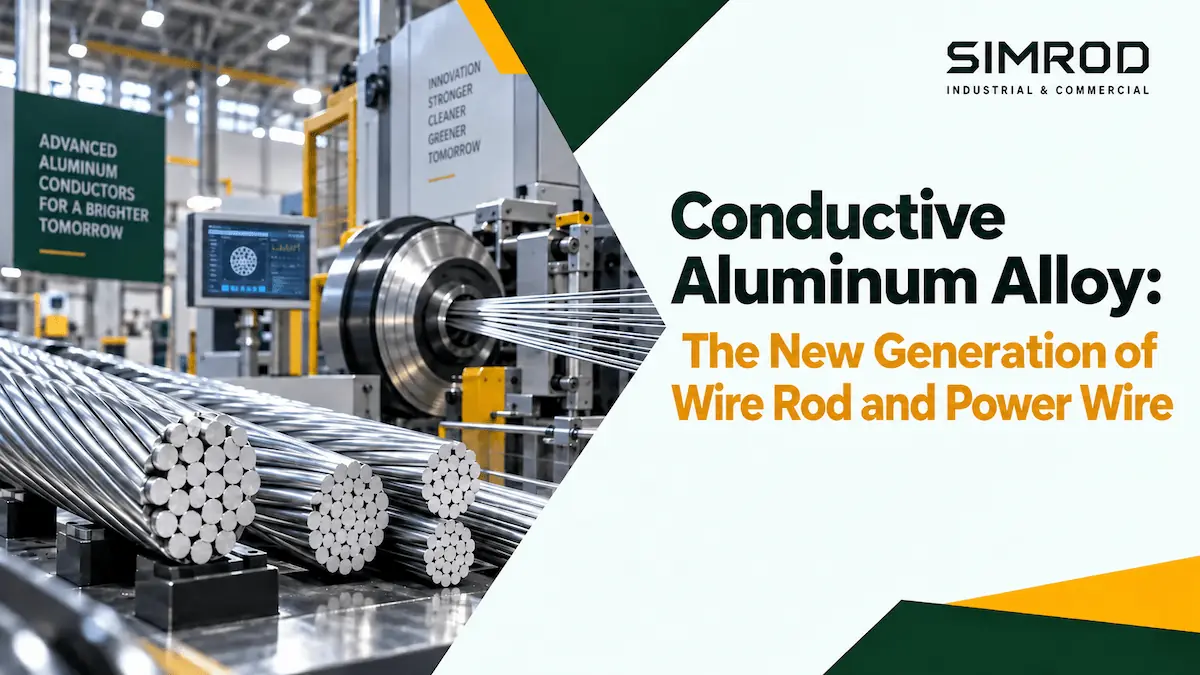
Aluminum Conductor Alloys: The Next Generation of Electrical Wire and Conductors
The global development of electricity transmission and distribution networks has increased the need for conductors with higher current-carrying capacity, lower weight, and greater stability under demanding operating conditions. In this context, the engineering of aluminum alloys has become an important pathway for improving the performance of conductors used in power lines and cables.
New research published in 2026 indicates that the industry is no longer focused solely on increasing the electrical conductivity of aluminum. Improving mechanical strength, reducing performance degradation at elevated temperatures, and enhancing the structural stability of conductors are also becoming increasingly important. This trend could influence future specifications for aluminum wire rod and raw materials used in conductor manufacturing.
Why Is the Thermal Performance of Aluminum Conductors Important?
Conductors used in power networks are exposed to electrical current during operation, which consequently causes their temperature to rise. An increase in conductor temperature can affect its mechanical properties and, under certain conditions, lead to reduced strength and gradual deformation.
For this reason, one of the major challenges in designing next-generation conductors is achieving a balance between electrical conductivity, mechanical strength, and stability at elevated temperatures.
Aluminum has an important position in the power transmission industry because of its low density and relatively favorable cost. However, the development of new generations of aluminum alloys could enable more effective use of this metal in demanding applications.
New Research Focuses on 6xxx and 8xxx Series Alloys
According to a study published in 2026, 6xxx- and 8xxx-series aluminum alloys are considered important materials for the development of overhead conductors and power cables because they offer a suitable combination of low weight, economic efficiency, and a balance between strength and electrical conductivity.
In these alloys, alloying elements and heat-treatment processes can modify the metal’s microstructure and consequently affect properties such as strength, conductivity, and thermal stability.
This highlights the importance of raw material manufacturing processes, because the final performance of a conductor depends not only on the chemical composition of the aluminum but also on processing methods, heat treatment, and microstructural control.
Creep Resistance: A Major Challenge for Transmission Lines
One of the important technical issues in the development of aluminum conductors is resistance to creep.
Creep refers to the gradual deformation of a material under sustained stress over an extended period. In conductors that remain exposed to mechanical and thermal loads for long periods, controlling this phenomenon is particularly important.
Research on aluminum-zirconium alloys has shown that modifying alloy composition and using conventional wire-forming processes can improve creep resistance while keeping changes in electrical conductivity within an acceptable range.
These findings are significant because they could facilitate the development of new conductor materials without requiring a complete transformation of existing manufacturing infrastructure.
The Connection Between Alloy Engineering and the Aluminum Wire Rod Industry
The development of advanced conductors is directly connected to the aluminum wire rod manufacturing industry.
As an important stage in the conductor production chain, wire rod must have appropriate technical and metallurgical characteristics to ensure that subsequent processes, such as drawing, stranding, and conductor manufacturing, can be performed effectively and consistently.
In new alloy systems, precise control of chemical composition becomes even more important. Even relatively small changes in the concentration of alloying elements can affect the mechanical, thermal, and electrical properties of the final product.
Therefore, the development of next-generation conductors could increase demand for wire rod with controlled chemical composition, greater uniformity, and stable metallurgical properties.
Can Next-Generation Conductors Increase Power Transmission Capacity?
One of the main objectives of developing advanced conductors is to improve the efficiency and capacity of electricity transmission networks.
In many projects, increasing transmission capacity without constructing entirely new transmission corridors can offer significant advantages. For this reason, engineers are seeking materials capable of maintaining stable performance under demanding thermal and mechanical conditions.
However, conductor selection depends on a combination of factors, including network design, weather conditions, line length, transmission capacity, conductor weight, and economic requirements. Therefore, a new alloy will not necessarily replace all existing conductor types; instead, different materials may offer specific advantages for particular applications.
The Role of Microstructure in Aluminum Conductor Performance
One of the important areas of current research is the relationship between aluminum microstructure and the final performance of conductors.
Grain structure, alloy precipitates, the distribution of alloying elements, and changes occurring during the manufacturing process can affect the mechanical and electrical properties of the wire.
Recent studies on aluminum wires with very fine-grained structures have also shown that microstructural changes can simultaneously influence mechanical strength and electrical conductivity.
This demonstrates that the future of the industry is not limited to simply selecting aluminum as the raw material. Instead, precise engineering of aluminum microstructure could become one of the key competitive factors in conductor manufacturing.
The Wire and Cable Industry Is Moving Toward More Engineered Materials
In the past, price and electrical conductivity were among the most important criteria for selecting raw materials in the wire and cable industry. However, as power networks increasingly require higher performance, other factors such as strength, weight, thermal stability, and service life have become more important.
This shift could move the aluminum wire rod market toward more specialized products—materials engineered for specific applications in addition to meeting basic industry standards.
At the same time, the development of new technologies could increase the need for tighter control over wire rod casting, rolling, heat treatment, and drawing processes.
Outlook for Advanced Aluminum Alloys
Given global investment in the development of electricity transmission networks and the growing need to transmit energy more efficiently, research into aluminum conductor alloys is expected to continue in the coming years.
A focus on improving thermal resistance, reducing long-term deformation, maintaining electrical conductivity, and lowering conductor weight could create opportunities for the development of new generations of conductors.
For raw material manufacturers, this trend will also increase the importance of quality control and a deeper understanding of the technical requirements of downstream industries.
Conclusion
The development of advanced aluminum alloys is creating new pathways for improving the performance of conductors used in electricity transmission and distribution networks.
Recent research indicates that achieving the right combination of electrical conductivity, mechanical strength, and thermal resistance is one of the key objectives in the development of next-generation conductors. 6xxx- and 8xxx-series alloys, as well as newer aluminum-zirconium alloys, represent examples of research directions in this field.
Over the long term, this trend could affect the raw material market for the wire and cable industry and increase demand for aluminum wire rod with more precise technical specifications and specialized performance characteristics.
Under these conditions, raw material quality, precise alloy composition control, and manufacturing process consistency will become increasingly important factors throughout the conductor and cable supply chain.