
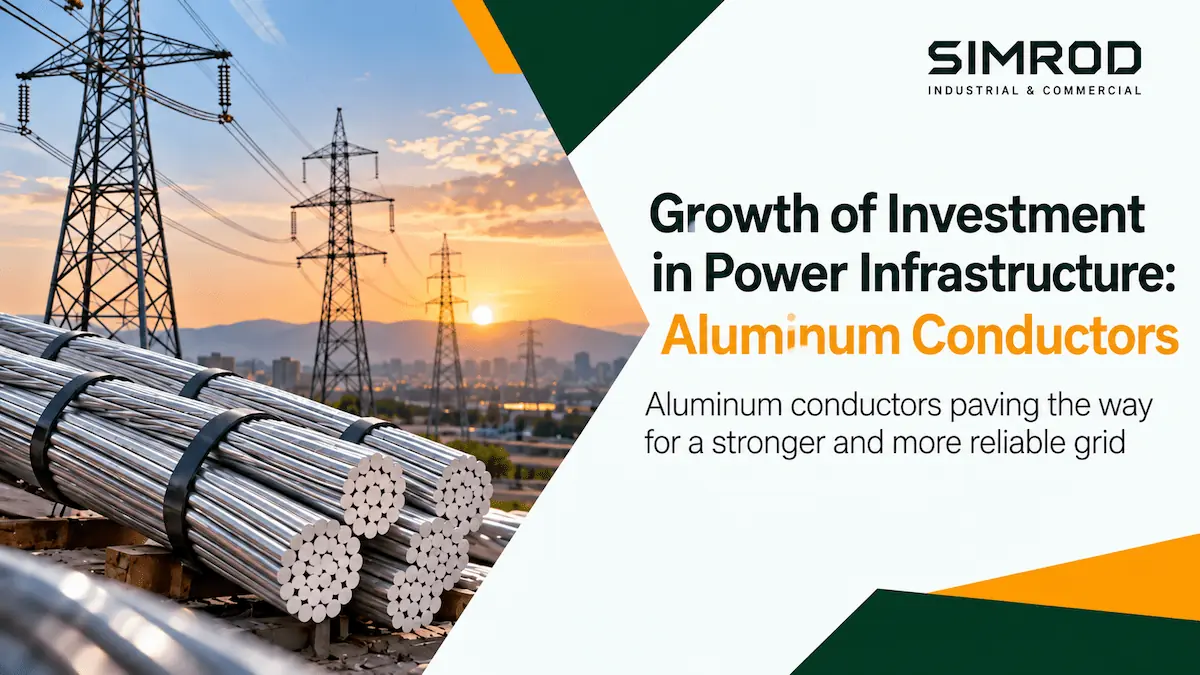
Growth in Power Infrastructure Investment: Demand for Aluminum Conductors on the Rise
The rapid expansion of infrastructure related to artificial intelligence, data centers, and advanced industries has increased the need to expand power generation and transmission capacity across many markets worldwide. Alongside the development of electricity transmission and distribution projects, this trend could lead to higher demand for aluminum conductors, aluminum wire and cable, and the raw materials used throughout this supply chain.
In recent weeks, industry reports have pointed to improving manufacturing activity in several major global economies. Increased investment in equipment related to artificial intelligence and advanced industries has been identified as one of the factors contributing to this trend. The growth of these sectors requires reliable power infrastructure, drawing greater attention to the development of electricity transmission and distribution networks.
Rising Demand for Power Infrastructure in Emerging Industries
The expansion of data centers and computing infrastructure is not limited to the development of digital equipment. For stable operations, these facilities require substantial electricity capacity, reliable transmission networks, and robust distribution systems.
As investment in artificial intelligence continues to increase, the power capacity required to supply data centers and new industrial facilities is also becoming increasingly important. Under these conditions, the development of transmission lines, substations, and distribution networks could become an important area of infrastructure investment.
This trend is particularly significant for the supply chain of aluminum conductor products. Aluminum is widely used in various conductors and transmission lines because of its lower weight compared with copper and its suitable characteristics for power transmission applications.
Why Is Electricity Transmission Network Development Important for the Aluminum Market?
Every new electricity transmission or distribution project requires a range of equipment and raw materials. Conductors, wires, and cables used in these projects are important components of the electricity network equipment supply chain.
If infrastructure projects continue to expand, they could increase demand for raw materials used in conductor manufacturing. In this context, aluminum rod and aluminum wire rod have an important position in the supply chain as key raw materials used in certain manufacturing processes for aluminum conductive products.
Therefore, changes in investment in electricity networks can be considered one of the indicators that should be monitored alongside global aluminum prices, production levels, inventory levels, and conditions in the wire and cable industry.
The Role of Data Centers and Artificial Intelligence in Future Power Demand
The growth of artificial intelligence in recent years has driven increased investment in data centers and computing infrastructure. Because these facilities consume significant amounts of electricity, they require transmission and distribution networks with higher capacity and reliability.
The growing electricity consumption of data centers could influence investment in power networks over the long term. Alongside the development of new power generation capacity, the expansion of transmission lines, substations, and network equipment is essential for delivering this energy to points of consumption.
This could create a new driver for the wire and cable industry supply chain—a driver that differs from traditional electricity consumption growth in buildings and industrial facilities and is more closely linked to large-scale infrastructure investment.
Aluminum Conductors: A Key Component in Power Network Development
Aluminum is an important material used in conductor manufacturing for electricity transmission because of its lower weight, suitable electrical conductivity, and suitability for overhead transmission lines.
In large-scale power transmission projects, conductor selection depends on factors such as transmission capacity, line length, environmental conditions, network design, and the project’s technical requirements. Therefore, an increase in the number of transmission and network development projects does not necessarily mean an equal increase in demand for all aluminum products. However, it can expand the potential market size for this supply chain.
From this perspective, trends in investment in electricity networks are becoming increasingly important for manufacturers and suppliers of aluminum raw materials.
The Global Market Is Changing
Recent developments in the industry indicate that aluminum demand is no longer driven solely by traditional sectors such as construction, automotive manufacturing, and packaging. Renewable energy development, electricity transmission networks, electric vehicles, data centers, and digital infrastructure have also become important factors influencing aluminum consumption.
This changing demand structure could become increasingly significant in the coming years. The development of new technologies requires extensive physical infrastructure, with electricity networks representing one of the most important components of that infrastructure.
For participants in the aluminum wire rod and aluminum conductive products market, monitoring electricity transmission and distribution projects, alongside aluminum prices and downstream industry conditions, can provide a more comprehensive picture of potential demand trends.
Outlook for Aluminum Conductor Demand
In the short term, various factors—including aluminum prices, energy costs, production conditions, infrastructure investment, and broader economic conditions—will influence the aluminum products market.
However, the long-term growth of data centers, artificial intelligence development, rising electricity consumption, and the need to modernize transmission and distribution networks could create a structural driver for increased demand across the power industry.
Under these conditions, the aluminum conductor market could benefit from the development of power infrastructure in different countries. The extent to which this potential is realized will depend on the pace of project execution, actual investment in electricity networks, and the condition of the raw material supply chain.
Conclusion
Growing investment in artificial intelligence, data centers, and advanced industries is increasing the need for stronger and more reliable power infrastructure. The development of electricity transmission and distribution networks, in turn, could affect demand for aluminum conductors, aluminum wire and cable, and the raw materials used in this industry.
Therefore, in addition to monitoring global aluminum prices and aluminum wire rod supply and demand, tracking investment trends in power projects and the development of transmission networks can be an important indicator when evaluating the future market for aluminum conductive products.
Simrod Sama focuses on the production and supply of aluminum products used across various industries and monitors developments throughout the aluminum supply chain and the market for aluminum conductive products.