
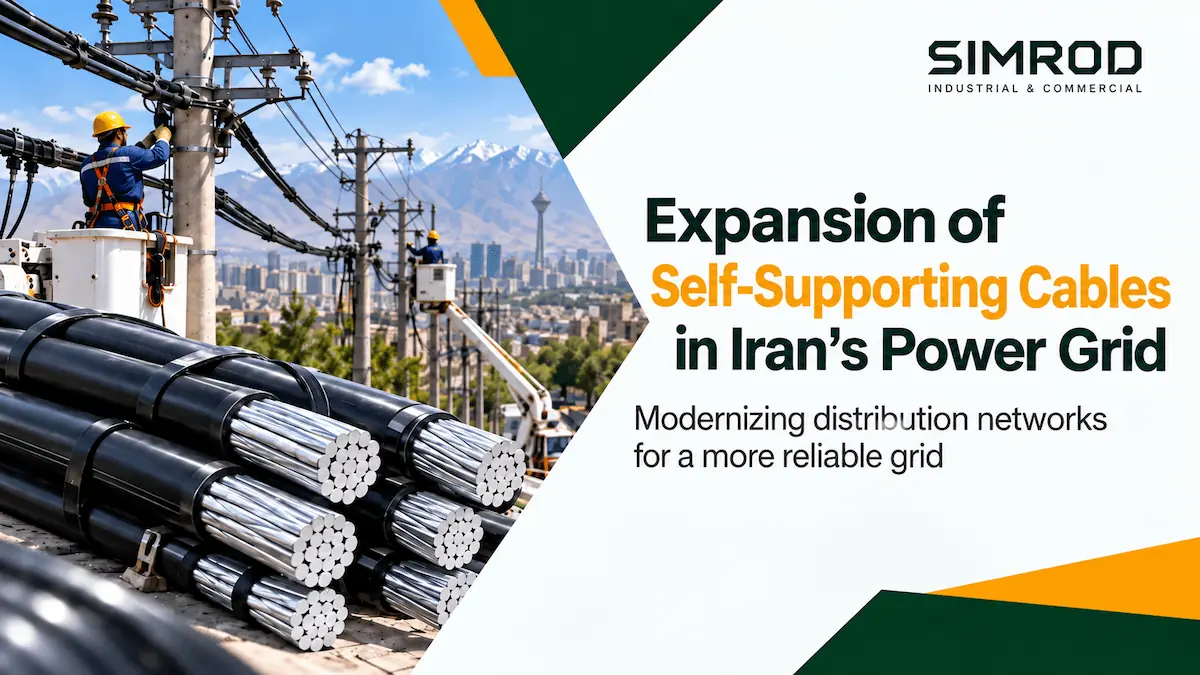
Development of Self-Supporting Cables in Iran: A New Phase of Distribution Network Modernization
The project to replace aging overhead wire networks with self-supporting cables in Iran’s electricity distribution network is progressing at a significant pace. According to the latest statistics announced by Tavanir, from the beginning of 1405 until the end of Tir, more than 3,800 kilometers of the country’s aging copper distribution networks have been converted to self-supporting cables.
The project aims to reduce network losses, improve the reliability of electricity supply, enhance safety, and reduce the vulnerability of distribution networks to environmental factors and incidents. It may also have an impact on the market for overhead cables and the raw materials used in the production of electrical conductors.
Large-Scale Conversion of Wire Networks to Cables in the Electricity Distribution System
Abdolreza Hosseini-Mehr, the official responsible for reducing network losses at Tavanir, stated that based on the performance recorded through the end of Tir 1405, approximately 77% of the operation to replace copper wires with self-supporting cables had been completed by electricity distribution companies across the country.
According to the report, several electricity distribution companies, including those in Markazi, Lorestan, Greater Tehran, Mashhad, Razavi Khorasan, North Khorasan, Qazvin, Kurdistan, Shiraz, and Bushehr, have achieved full progress in implementing the project. In several other provinces, project progress has also exceeded 94%.
The continuation of this process indicates that replacing aging networks with self-supporting cables has become one of the key priorities in modernizing Iran’s electricity distribution infrastructure.
Why Are Aging Networks Being Converted to Self-Supporting Cables?
In many parts of the country, traditional overhead wire networks are exposed to factors such as severe weather conditions, contact with external objects, insufficient conductor clearance, and other environmental hazards. Modernizing these networks can help improve the safety and reliability of the electricity distribution system.
With their integrated construction, self-supporting cables provide more efficient use of available space in overhead networks and are widely used in electricity distribution network modernization projects.
Reducing technical losses, improving network reliability, and decreasing the vulnerability of overhead lines to certain environmental factors are among the main objectives of converting traditional wire networks to self-supporting cables.
Growing Demand for Overhead Cables and Aluminum Conductors
The expansion of electricity network modernization projects is significant not only from an infrastructure perspective but also from the standpoint of the wire and cable industry supply chain.
The increasing number of projects involving the conversion of traditional wire networks to self-supporting cables means greater demand for production capacity and the supply of products used in electricity distribution networks. In this context, overhead cables, aluminum conductors, and aluminum wire rod are among the important products within the electricity industry supply chain.
Aluminum is widely used in the production of various conductors and products for power transmission and distribution networks because of its lower weight compared with copper, as well as its suitable electrical and economic characteristics.
Therefore, the development of electricity distribution networks and the implementation of modernization projects can increase the importance of ensuring a stable supply of high-quality raw materials and products for the wire and cable industry.
The Role of Aluminum Wire Rod in the Electrical Conductor Supply Chain
Aluminum wire rod is one of the important raw materials in the production chain of wires, cables, and aluminum conductors.
The quality of the aluminum rod used in the manufacturing process can affect characteristics such as electrical conductivity, mechanical properties, drawability, and the final quality of wires and conductors. For this reason, the supply of standardized raw materials is highly important for manufacturers operating in the wire and cable industry.
Given the ongoing modernization of Iran’s electricity distribution network, expanding production capacity and ensuring the supply of the raw materials required by the industry can also play an important role in meeting the needs of power network projects.
Distribution Network Modernization: An Opportunity to Develop the Power Industry Supply Chain
The conversion of aging copper networks to self-supporting cables is not merely an infrastructure project within the electricity sector. It also involves a broader range of industries producing raw materials, conductors, cables, and network equipment.
As the scope of these projects expands, the importance of product quality, manufacturing standards, and supply-chain reliability also increases.
From this perspective, the continuation of electricity distribution network modernization projects can be particularly important for manufacturers and suppliers of wire and cable industry products, including aluminum wire rod, aluminum rod, and overhead cables.
Outlook for the Self-Supporting Cable Market in Iran
Considering the significant progress already made in converting traditional wire networks to cables and the plans announced for continuing these operations across electricity distribution companies, distribution network modernization projects are expected to remain an important area of Iran’s power industry.
The continuation of this trend can not only contribute to the modernization of the country’s electricity infrastructure but also influence demand for products used in the production and installation of overhead distribution networks.
For the wire and cable industry, such projects are significant from two perspectives: on the one hand, they contribute to infrastructure development and increased market demand; on the other hand, they further emphasize the need for standardized raw materials and high-quality products.
Simrod Sama operates within the power industry supply chain, supplying and producing products used in the electricity sector, including aluminum wire rod, overhead cables, and low-voltage cables.